
AI Model Translates Plain Language into Functional Proteins
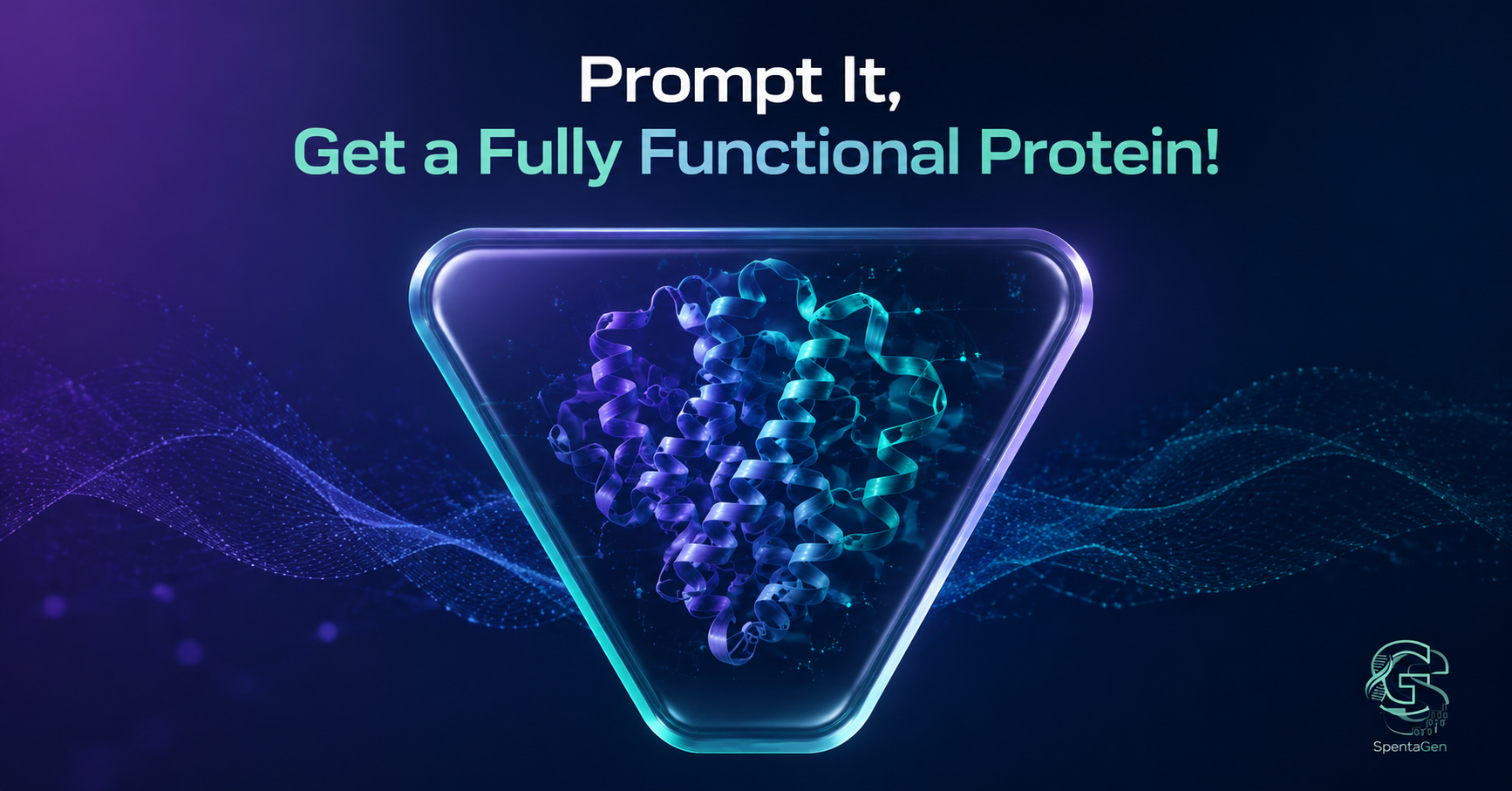
Researchers at the University of Washington have developed MP4, an artificial intelligence model that generates functional protein sequences directly from natural language prompts — without relying on known structures or templates.
The work, published August 13 in ACS Synthetic Biology, represents a significant departure from traditional protein design methods.
How It Works
MP4 is a transformer-based model trained on 3.2 billion data points and 138,000 tokens from protein sequences. Unlike previous AI tools that require structural inputs, MP4 takes only text — for example, “design a protein that binds and hydrolyzes ATP” — and outputs a full amino-acid sequence.
In benchmarking against 96 diverse prompts, the model performed well across three key metrics: sequence realism, predicted fold quality, and alignment to the requested function. This achievement is notable because it uses only text as input.
Experimental Validation
The team synthesized two MP4-designed proteins for laboratory testing. Both proteins:
Expressed successfully in E. coli
Demonstrated thermostability
Were resolved by X-ray crystallography at 1.30 Å and 1.77 Å
One of the two designs revealed a previously unknown protein fold — a structure not found in nature. Both proteins also showed ATP binding and hydrolysis activity in vitro, confirming they function as active enzymes.
Significance and Limitations
This work demonstrates that natural-language intent can be translated into functional proteins that express, crystallize, and catalyze. It lowers the barrier to protein design and opens new possibilities for creative exploration in molecular programming.
However, the researchers emphasize that the approach is still in early development, with incomplete coverage and controllability. Not every prompt yields successful designs, and further refinement is needed.
The Bottom Line
MP4 doesn’t replace existing protein design tools — but it adds a powerful new dimension: design by description. For the first time, researchers can articulate what they want in plain language and receive a working protein sequence in return.
For the full study, visit: ACS Synthetic Biology (Available to Purchase)
Stay updated on the latest in synthetic biology and AI-driven protein design:
Follow SpentaGen on Instagram, Telegram, and LinkedIn for more news and insights.