

Understanding Proteomics: A Brief Guide
What is Proteomics?
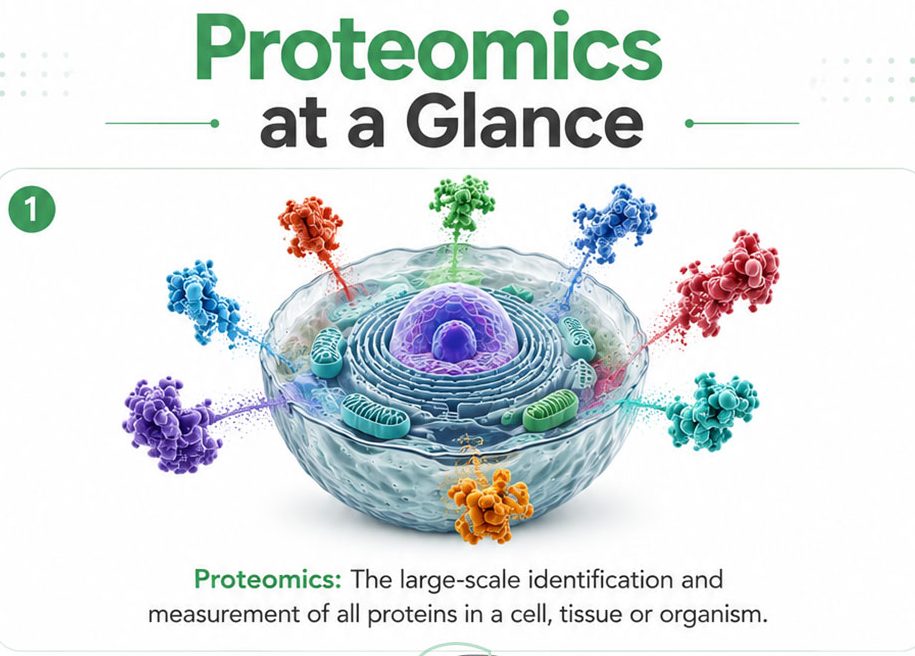
Proteomics is the large‑scale study of the complete set of proteins — the proteome — expressed by a cell, tissue, or organism under specific conditions. While the genome is relatively static, the proteome is highly dynamic, constantly changing in response to developmental stages, environmental stimuli, and pathological states.
Genomics tells us what could happen, while proteomics tells us what is actually happening.
Qualitative vs. Quantitative Proteomics
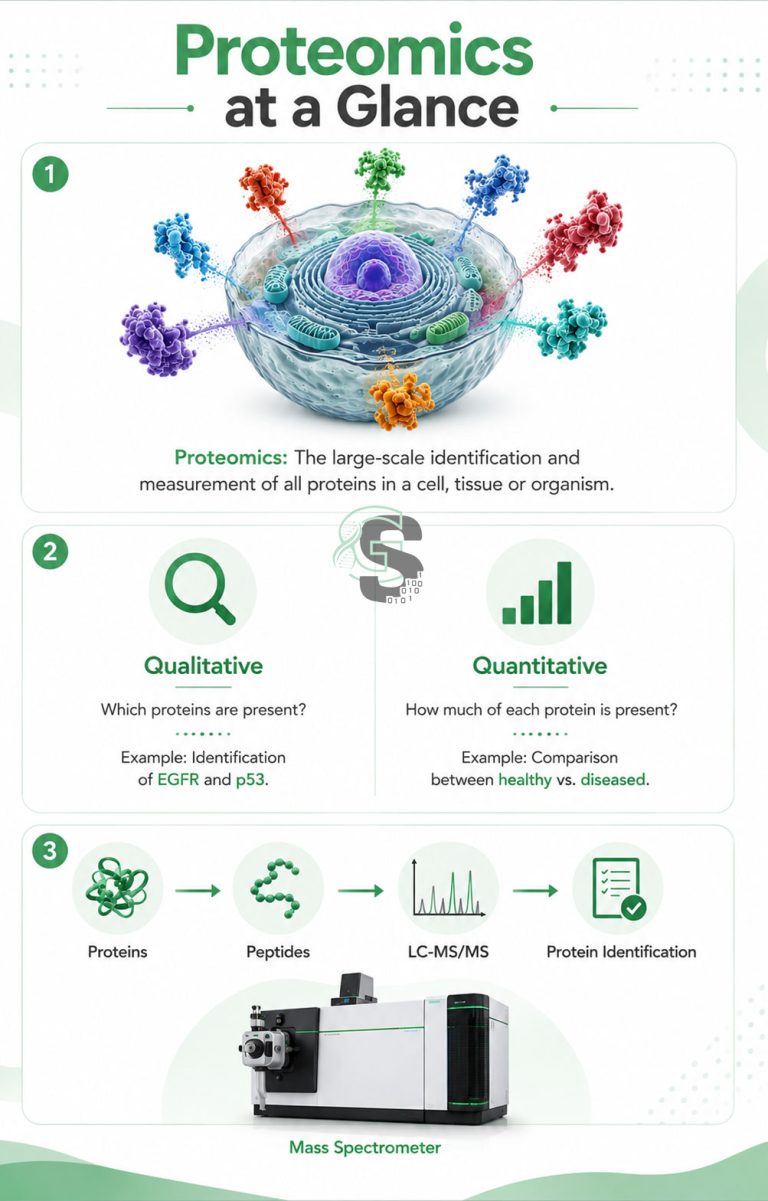
Proteomics is broadly divided into two complementary approaches:
The Core Technology: Mass Spectrometry
The backbone of modern proteomics is mass spectrometry (MS), particularly when coupled with liquid chromatography (LC–MS/MS). The standard workflow follows these steps:
🔹 Protein Extraction → 🔹 Enzymatic Digestion (into peptides) → 🔹 LC Separation → 🔹 MS/MS Analysis → 🔹 Identification & Quantification
This powerful platform enables the simultaneous detection and quantification of thousands of proteins with exceptional sensitivity and accuracy.
Key Applications
Proteomics plays a transformative role in biomedical research and clinical practice:
🔬 Biomarker Discovery – Identifying protein signatures for early disease detection.
💊 Personalized Medicine – Tailoring treatments based on individual protein expression profiles.
🧪 Drug Development – Understanding mechanisms of action and identifying therapeutic targets.
🩺 Diagnostics – Developing protein‑based tests for rapid and accurate diagnosis.
Why It Matters
The proteome reflects the real‑time functional state of a cell. By studying it, researchers can bridge the gap between genomic information and actual phenotype. This makes proteomics an essential tool for understanding disease mechanisms, discovering new drug targets, and advancing precision medicine.
References
- Aslam, B., et al. (2017). Proteomics: Technologies and Their Applications. Journal of Chromatographic Science.
- Ong, S.E., & Mann, M. (2005). Mass spectrometry–based proteomics turns quantitative. Nature Chemical Biology.